Why rubber tracks tear and how to extend their service life
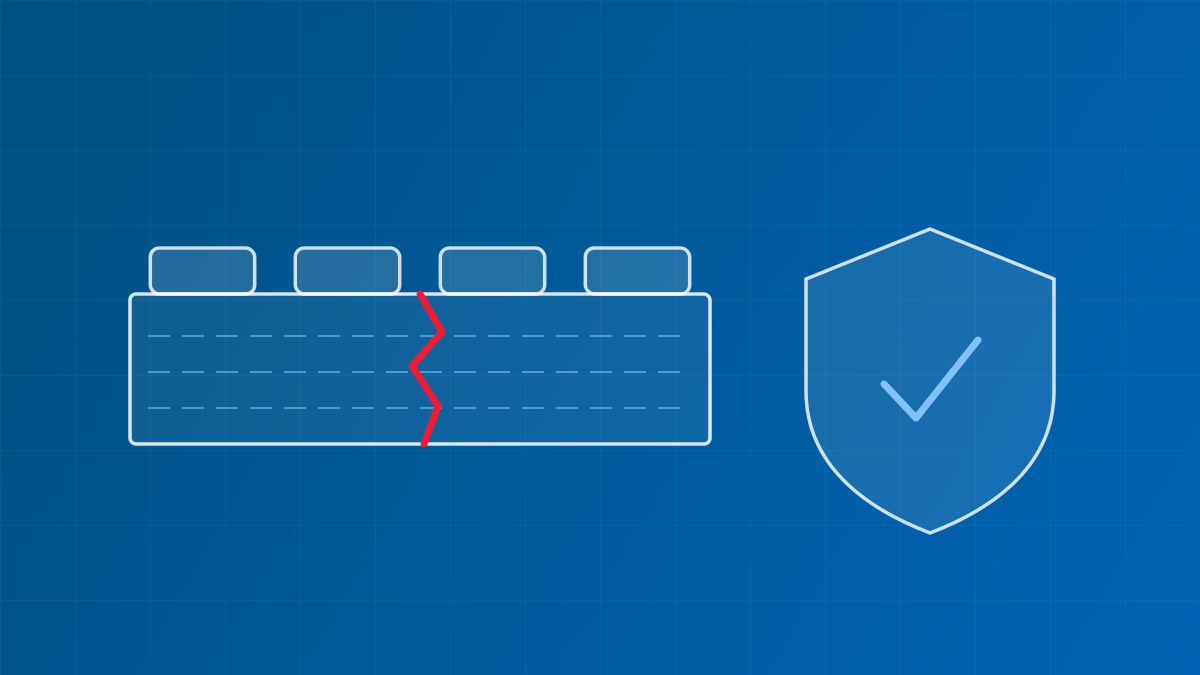
The rated service life of a rubber track is 1,200–2,000 engine hours, yet in practice belts often "die" twice as early. In 8 cases out of 10 the culprit is not the manufacturer but the operating conditions. Let's break down what exactly kills tracks and how to avoid it.
1. Incorrect tension — cause No. 1
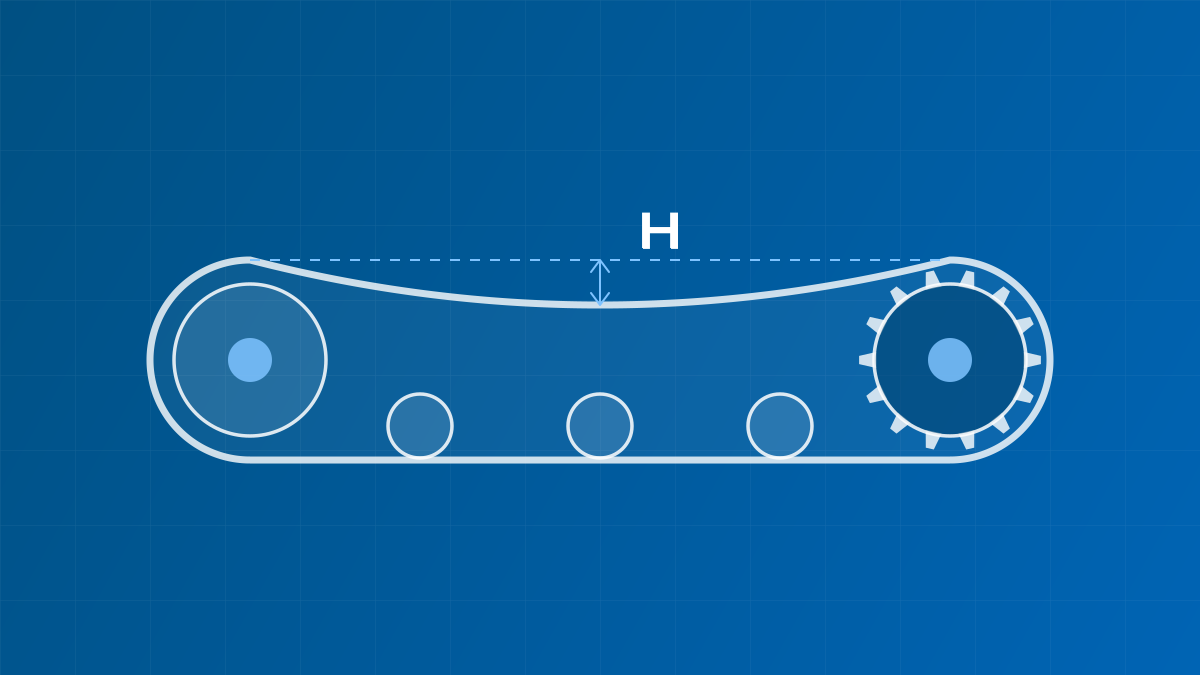
An over-tensioned belt constantly works on the verge of tearing: the load on the cord grows, the inserts heat up, and the rollers and idler wear faster. An under-tensioned one sags, skips on the sprocket and can come off in a turn. Check the sag per your machine's manual (the figure differs between classes of machine — roughly 10 to 50 mm) weekly and after every change of conditions: clay packed into the undercarriage changes the tension on the move.
2. A worn drive sprocket
A new track on a "sawn" sprocket is money thrown away: sharpened teeth cut the rubber bridges between the windows and smash the inserts. The rule is simple: replacing your second track — replace the sprocket too. You can check its condition with a template or by comparing the tooth profile with a new one.
3. Working on aggressive surfaces
Sharp crushed stone, rebar, scrap metal and broken concrete cut into the tread, moisture gets into the cuts — and the cord rusts and tears. If working on rocks is unavoidable, choose reinforced series with a thicker tread and an extra cord layer, and repair tread cuts by vulcanisation right away, without waiting for a full tear; once the cord is exposed, the belt is replaced rather than repaired.
4. Sharp pivot turns
A 180° pivot turn on dry asphalt or concrete is the fastest way to rip off the lugs and spin the belt on its inserts. Turn in a wider arc, or at least on soil; on hard surfaces — only smoothly.
5. Chemicals and sunlight
Fuel, oils, fertilisers and salts corrode rubber. After working with chemicals, wash the undercarriage with water. Park the machine in the shade or cover it for storage: in two or three seasons, UV makes rubber brittle. In winter, let the belt "warm up" at low speed before starting work — frozen rubber is more fragile.
6. Packed mud and foreign objects
Clay and stones packed between the sprocket and the belt act as an abrasive wedge — hence torn bridges and bent inserts. Clean the undercarriage at the end of the shift, especially in winter: clay frozen overnight can rip the track off within the first few metres in the morning.
7. Overloading the machine
Constantly running with a heaped bucket and heavy attachments not rated for the machine's class overloads both the cord and the inserts. If your jobs are systematically heavier than the spec sheet, consider a reinforced track series: its strength margin is designed exactly for such regimes.
A quick checklist for the operator
- Check the tension weekly and after a change of ground.
- Replace the sprocket with every second track.
- Clean the undercarriage at the end of the shift.
- Avoid pivot turns on hard surfaces.
- Repair cuts right away, while the cord is still untouched — vulcanisation costs less than a new belt.
Following these rules genuinely adds a season or two to a track's life. And when a replacement is due after all, use the machine-model finder on our home page: we'll show compatible sizes that are in stock.