Rubber track tread patterns and marking suffixes: N, W, K and others
Two tracks marked identically as 300x52.5x84 can fail to fit the same machine — if different letters follow the numbers. And two fully compatible tracks can behave completely differently on site — if their tread patterns differ. This guide covers both topics: suffixes first, tread second.
Where the letters in the marking come from
There is no industry-wide standard for suffixes: the letters are assigned by the track manufacturer, and different brands may use them differently. Over the decades, though, the market has settled on conventions that most spare-parts catalogues follow. A suffix usually denotes a version of the size with a different design of the metal inserts and sprocket windows — the things the three numbers don't show, but which decide whether your sprocket's tooth will actually engage the track.
The most common suffixes
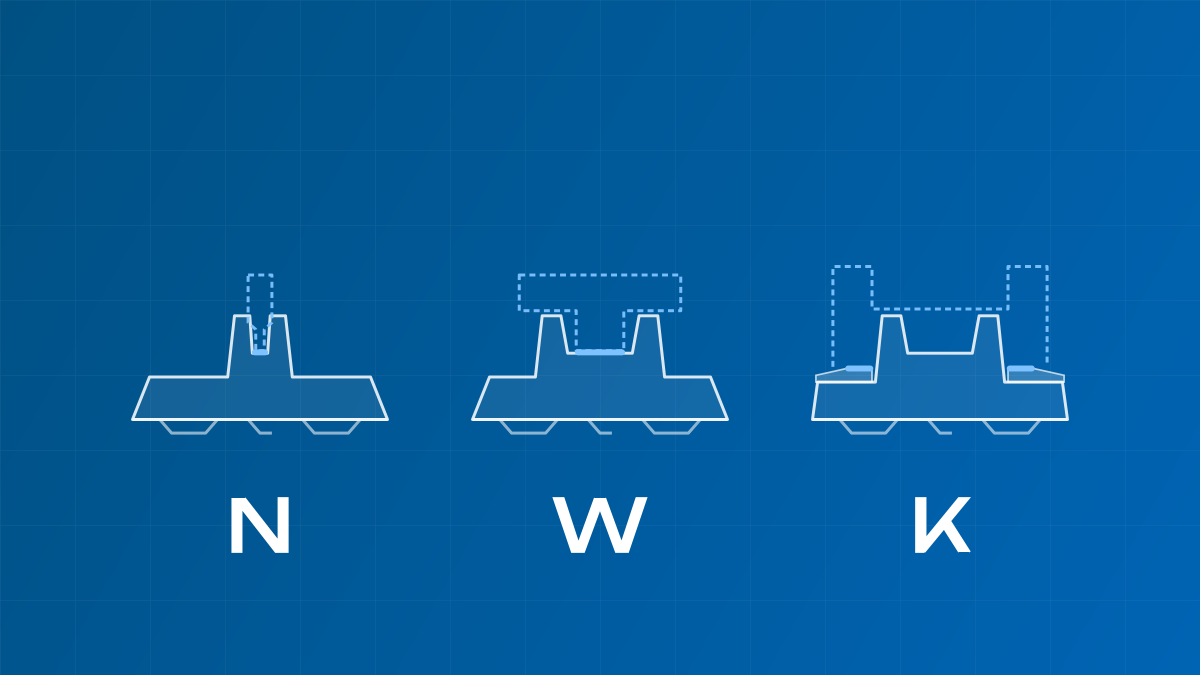
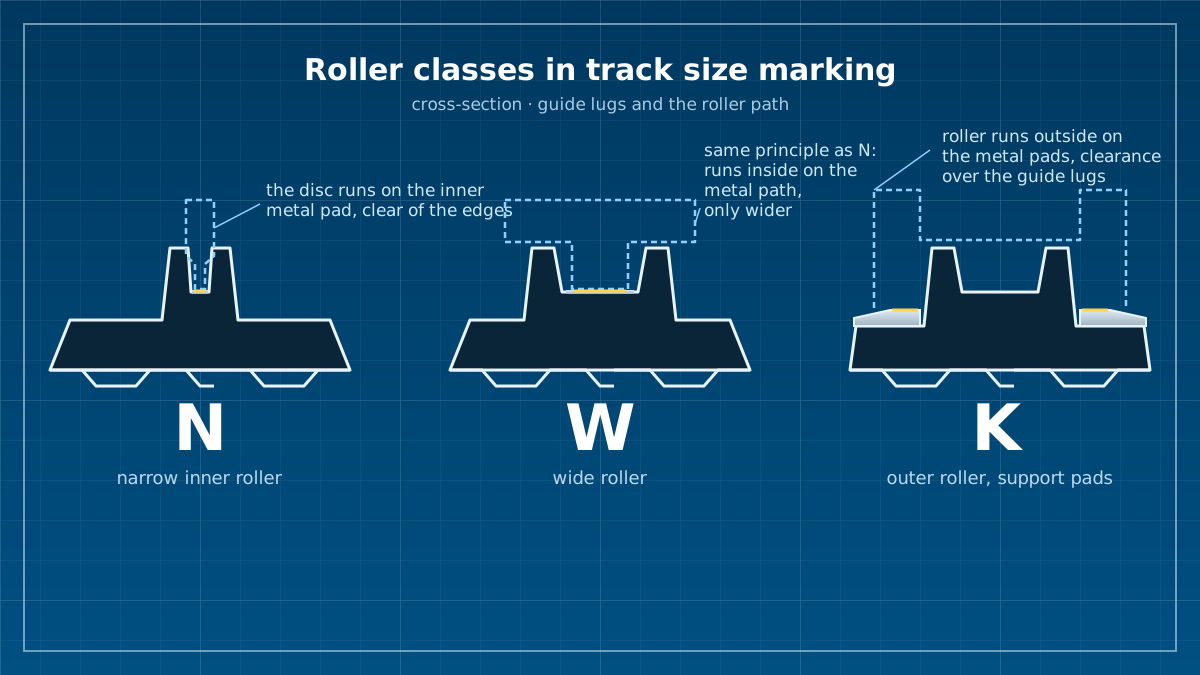
There is no single industry standard for these letters, but the core reads the same in almost every catalogue: N — narrow inner roller, W — wide roller, K — outer roller. The letter describes the roller class and the engagement geometry, so versions of one size are not interchangeable: 450x71x82N and 450x71x82W are different tracks for different sprockets, even though all three numbers match. The same applies to the 300x52.5, 300x55 and 300x109 families.
FTS marking — one of the most widespread in Europe
Our plant is one of the largest rubber track manufacturers, and a significant share of the belts on the European market carries exactly this system of letters. If your track comes from the European market, there is a good chance the letters on its label mean precisely what the table below says: the roller class plus the series (standard or reinforced), or the tread pattern.
| Roller class and series | Meaning |
|---|---|
| S | standard series |
| K | outer roller, reinforced series |
| N | narrow inner roller, reinforced series (premium) |
| NS | narrow inner roller, standard series |
| W | wide roller, reinforced series (premium) |
| WS | wide roller, standard series |
| WKS | wide outer roller, standard series |
| R | outer roller, reinforced series (premium) |
| RS | outer roller, standard series |
| Tread pattern | Meaning |
| AB | tread pattern B |
| AC | tread pattern C |
| B | tread pattern variant |
| C | tread pattern variant |
| SB | tread pattern variant |
| Z | tread pattern variant |
| Machine manufacturer series | Meaning |
| Y | Yanmar series |
In other manufacturers' catalogues the same letters can mean something else: their own insert versions, their own series or their own tread pattern. K, for instance, is historically linked in some catalogues to Kubota-type undercarriages. So the table above is a reliable guide, not a replacement for checking: the version is finally confirmed by the shape of the inserts and the engagement windows. K-version examples from our catalogue: 230x48x70K, 300x53x84K, 400x72.5x74K. If the letter on your label is not in the table, don't decode it yourself — send our manager a photo of the inserts.
Note that the suffix can appear after the link count (450x71x82W) or after the pitch (300x52.5Kx84 — some manufacturers place it there to stress that the letter concerns the engagement design). It's the same versioning principle either way.
The golden compatibility rule
The suffix is a full part of the size. Order a 450x71x82W instead of a 450x71x82N and you'll get a track that won't seat properly on your sprocket: a risk of skipping, the track coming off, and accelerated wear of both the sprocket and the track itself. If the letter on your old track is unreadable, take a close-up photo of the track's inner side: the manager can identify the version from the shape of the inserts and the engagement windows. That's a standard pre-order check.
Tread pattern: why it matters
Unlike the suffix, the tread doesn't affect fitment: when the full size, the sprocket engagement type and the machine manufacturer's requirements all match, tracks are interchangeable regardless of pattern. But the pattern is what determines traction, ride smoothness, self-cleaning, wear rate and the marks the machine leaves on the surface.
Block tread
Rectangular blocks arranged in rows. The all-round everyday pattern: large contact area, even wear, smooth, stable running on hard surfaces and good lateral stability. The default choice for construction sites where the machine runs on both soil and concrete.
Zigzag (C-lug pattern)
Continuous lugs shaped as a zigzag or the letter C. A smoother ride with less vibration on hard surfaces, decent traction on mixed ground and reasonable self-cleaning. Extremely common as the factory pattern on mini excavators.
Chevron (herringbone)
The directional pattern familiar from tractor tyres. Usually the highest traction on soft, wet ground among the standard patterns: the lugs work like paddles and self-clean under load. The price is higher vibration and faster wear on asphalt and concrete. The pick for agricultural machines, peat and clay. Important: a directional pattern has an orientation — mind the fitting direction.
Straight bar (turf tread)
Low, continuous transverse or longitudinal bars. Gentle on the surface — the low lugs don't cut into turf or leave marks on paving: lawns, paving slabs, landscaping. Off-road traction is the most modest of all the patterns.
Heavy-duty series
Dedicated series with a thicker tread, deeper blocks and extra cord layers for rock, crushed stone and demolition work. Cut resistance comes above all from the rubber compound, the tread thickness and the reinforcing carcass; the pattern in these series is most often block.
Choosing a pattern for your work
- Construction site, mixed surfaces — block or zigzag.
- Earthworks on wet and loose soils, agriculture — chevron.
- Landscaping, lawns, paving — straight bar / turf.
- Rock, crushed stone, demolition — a heavy-duty series with block tread.
If the machine works in varied conditions, choose by the dominant job type: an “everything at once” tread is always a compromise, and the universal block and zigzag patterns handle that role best.
Can you fit a different pattern than before
Mostly, yes. The tread pattern is a choice for your working conditions, not a hard requirement of the machine: as long as the full size and the sprocket engagement type match, the factory zigzag can usually be swapped for chevron or block with no undercarriage modifications. Two caveats. Change the pattern on both sides at once: different treads left and right give different grip, and the machine will pull to one side on loose ground. And for machines whose manufacturer sets specific track requirements (weight, series), check your choice against the manual or with our manager.
What to state when ordering
The ideal enquiry looks like this: the size with its suffix (or photos of the marking or the inserts if the letter is unreadable) plus your working conditions — soil, surfaces, share of work on rock. With that, our manager selects the sprocket engagement type, the tread pattern and the strength series. If the marking has worn off, our measuring guide shows how to take the size; torn between two options — give us a call and we'll help you pick the right pattern for your conditions. And if you know the make and model of the machine, start with our step-by-step selection by machine model — it narrows the size down before you pick the pattern.